Harvard's Robert Putnam: Rebuilding American Trust Starts With Trustworthiness
In the closing episode of the On Point series "Essential trust," the political scientist argues the problem is a decline in trustworthiness rather than trust alone, and points to the early 1900s as a period the country has recovered from before.
By Amy Swan ·
The final installment of the radio series "Essential trust" on On Point, released on Dec. 2, 2022, asked whether trust among Americans, and between Americans and their institutions, can be rebuilt. Host Meghna Chakrabarti spoke with Harvard public policy professor Robert Putnam and On Point news analyst Jack Beatty.
The episode opened with listeners describing a loss of faith. One caller in Vermont said they no longer trusted fellow Americans. A caller in California doubted that votes matter. A caller in Virginia said that reactions to the statement "Black Lives Matter" had shattered their trust in neighbors, coworkers and churchgoers. Chakrabarti said such views are far from unusual. Research from NORC at the University of Chicago, which has tracked social trends since 1972, shows barely 30% of Americans agree most people can be trusted. Only 38% trust the medical system, 11% trust television news, and 7% trust Congress.
Beatty noted that in the early 1960s nearly two-thirds of Americans said they trusted other people, while two decades into the 21st century about two-thirds do not. Putnam, who said the callers were typical of Americans today, urged a change in framing. Trusting someone untrustworthy, he said, is gullibility rather than a virtue, so the real question is whether the country is in a trustworthiness recession, an "honesty recession."
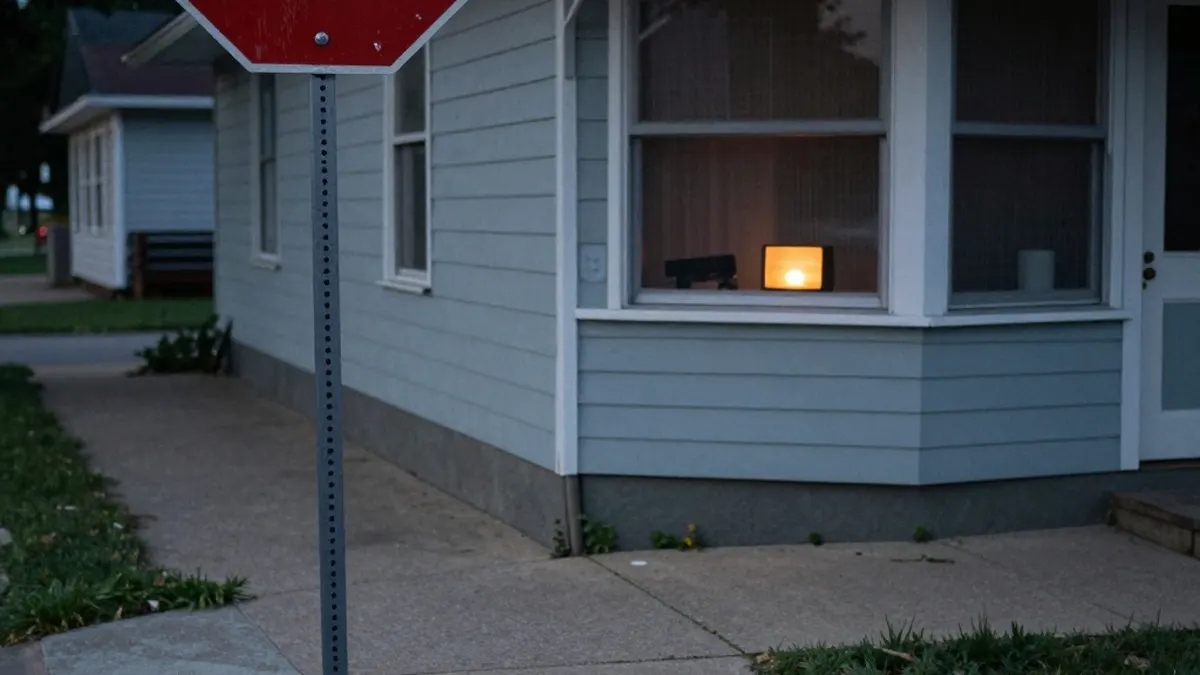
Trustworthiness is harder to measure than trust, Putnam said, because people have every reason to mislead when asked whether they can be trusted. He cited behavioral studies instead. One tracked drivers at a stop sign in Westchester, New York, beginning around the late 1960s. Early on most drivers stopped, at least with a slow roll, but by the final study people drove straight through. He also described "lost letter" experiments, in which researchers drop stamped, addressed envelopes and count how many are returned. Putnam recalled that roughly 75% to 80% come back in Stockholm and about 10% in Palermo, though he said he did not remember the exact figures.
Beatty called the reframing encouraging, since making institutions more trustworthy could lead people to trust them more. He recalled Putnam's dealings with President Clinton, who wanted government to work better so that people would trust it.
Other listeners voiced distrust of specific institutions. A caller in Iowa said the news media fail to distinguish science from pseudoscience. A caller in Miami said Hollywood and video media shape whom people trust. A caller in Rhode Island said corporate and foundation influence, including from the Gates Foundation, had eroded trust in the media, NPR included. Chakrabarti responded that many public radio stations accept such funding but that it has no direct influence on On Point's journalism.
Chakrabarti suggested that trustworthiness can be understood as a record of promises kept, and that many Americans feel promises made to them have gone unfulfilled. She asked Putnam where in U.S. history conditions were similar. He pointed to the Gilded Age of the late 19th century, a period he and coauthor Shaylyn Romney Garrett examine in their book "The Upswing."
Putnam described 1890 and 1900 as strikingly like the present: wide economic inequality, with the Rockefellers on New York's Upper East Side and crowded immigrant neighborhoods on the Lower East Side; tribal, polarized politics; and low social capital, his term for connections among people. Americans were focused on "What's in it for me?" In the episode's introduction, he said the recovery was not driven by a policy change but by a shift in ordinary Americans' views of the duties they owe one another. The transcript provided breaks off as he begins describing the changes that started in the early 1900s.
Source: LAist